


Innovative Shelter Solution

Updated: Aug 15, 2025

OLYMPIA – Funding has been secured for the purchase and development of a half-acre lot on Olympia’s eastern edge that will serve as a temporary homeless shelter and evolve to more broadly serve Thurston County’s unhoused residents.
Just as it appeared that Interfaith Works would have to turn out the 23 people we’ve been caring for on the site of the organization’s future permanent shelter and supportive housing building at 2828 Martin Way, a new plan has come together. Partners in the $1.7 million plan include Thurston County, the Washington State Department of Commerce, the City of Olympia, the United Way of Thurston County, First United Methodist Church, and a private donor-lender.
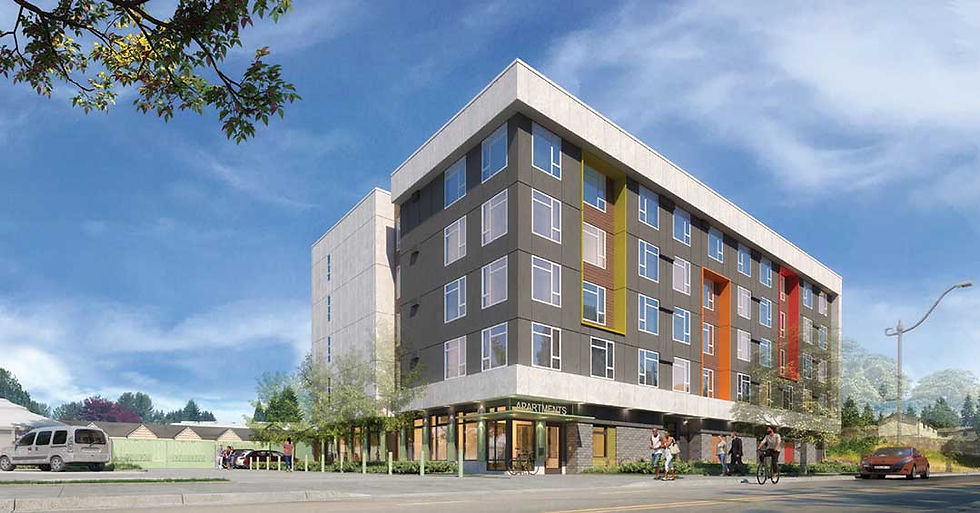
Since April, the City of Olympia has allowed Interfaith Works to use an empty former podiatry and dental office at 2828 Martin Way as an overflow shelter to accommodate social distancing at our crowded downtown shelter guests after the COVID-19 pandemic hit. We will have to move next week to make way for construction to start on a multi-story building built by the Seattle-based Low Income Housing Institute (LIHI) and staffed by Interfaith Works. It will have 65 apartments above a new 60-bed shelter facility.
There are multiple moving parts to this complex plan involving three sites, building demolition, two construction projects, and relocating our shelter guests twice,” said Andrew Rayment, president of the Interfaith Works Board of Directors. “Sometimes miracles do occur. We are incredibly grateful to all of the partners who helped make this happen.”


3444 Martin Way
The plan calls for purchasing a lot at 3444 Martin Way and erecting a 5,250-square-foot Sprung Structure to serve as a temporary shelter. A number of American and Canadian cities are using these heavy-duty modular structures to shelter unhoused people. The new structure is expected to be ready for occupancy by mid-January/early February 2021. Until then, the people who had been sheltered at 2828 Martin Way will be temporarily housed at First United Methodist Church of Olympia.

First United Methodist Church of Olympia
“The congregation of First United Methodist Church of Olympia is thrilled to partner with Interfaith Works and support the vital work they are doing in our community,” said the Rev. Amanda Nicol, Associate Pastor. "Our Christian faith compels us to love God by seeking justice, kindness, and dignity for the most vulnerable among us. The pandemic has left our building profoundly underutilized, so we feel blessed to offer this act of hospitality to our unsheltered neighbors.”
Keylee Marineau, Thurston County Homeless and Affordable Housing Coordinator, noted that Thurston County has seen a dramatic loss of shelter bed capacity over the past year.
"It’s no secret that we have hundreds of unsheltered people on our streets and in wooded areas with no options to get inside as winter approaches," Marineau said. "Any addition of 24/7 shelter beds to our system is a major win.”
2828 Martin Way
Interfaith Works and LIHI expect to break ground in December on the five-story building that will provide a new homeless shelter and supportive housing apartments at 2828 Martin Way. Once the new building is ready for occupancy, the people to be housed in the temporary shelter and those in a second Interfaith Works shelter, now located at Olympia’s First Christian Church, will move in. When that move is complete, the modular building at 3444 Martin Way will convert into a day shelter and a hygiene center. Eventually, the private donor who helped with the property purchase hopes it will be possible to build low-income housing units there as well.
Interfaith Works Executive Director Meg Martin was quick to praise the Interfaith Board and funding partners for their willingness to embrace the complex project.
“At a time when the COVID-19 crisis has made all of our lives harder, this community has come together with a pragmatic, generous, and heart-strong plan to help our most vulnerable residents,” Martin said. “It’s remarkable, but not surprising. This effort proves that Thurston County is home to some of the most caring, innovative, and courageous people in the world.”
Q&A for Neighbors
More information about the temporary relocation to the First United Methodist Church can be found online as well as any links to future neighbor meetings as they arise.
PURPOSE
The purpose of this page is to provide information and resources for the community about the temporary relocation of the Interfaith Works shelter that has been located at 2828 Martin Way since April 6th, 2020. Interfaith Works will be located at FUMCO from November 1, 2020-November 31, 2021 until our next building is ready for occupancy.
PARTNERSHIP
The frequently asked questions below were created in partnership with FUMCO senior leadership to learn more about the proposal and hopefully answer any questions you may have. Please reach out directly through our contact form for any questions you may have, we look forward to being neighbors!
Who is Interfaith Works?
Interfaith Works is an Olympia-based non-profit that exists to promote interfaith understanding and serve the community through charitable, social, and educational endeavors. First UMC Olympia is a charter member of Interfaith Works.
The mission of the Interfaith Works Emergency Shelter is to advance the social inclusion and empowerment of our neighbors experiencing homelessness through innovative practices of sheltering, mental health, and emergency basic needs coordination. Interfaith Works is dedicated to providing emergency services and support to those in need, not as charity but as an act of social justice. The work of the Interfaith Works Emergency Shelter is rooted in empowerment, social inclusion, and community education to end the unnecessary stigmatization of the most vulnerable.
What is the need in IW asking FUMCO to help address?
Interfaith Works Homeless Services has undergone several changes since the start of the COVID-19 pandemic. They expanded the First Christian Church shelter to 24 hours/day instead of just nightly. They opened a second shelter site in April in a decaying dental clinic at 2828 Martin Way to accommodate 6 feet of social distancing and absorb some of our more vulnerable neighbors still sleeping outside. This second shelter site is quickly approaching the deadline of having to vacate to begin construction on the new 2828 Martin Way Shelter and Permanent Supportive Housing building. Interfaith Works is currently in the process of securing property and constructing a modular shelter that the Martin Way guests would move into until construction on the permanent 2828 Martin Way shelter is complete. Interfaith Works is asking First Olympia to shelter its Martin Way guests through this winter. This shelter would operate in our building 24/7 and act as a temporary shelter until the modular shelter is complete.
Who will the shelter serve?
At maximum capacity, this shelter will serve thirty-eight vulnerable adults over the age of fifty. The shelter guests residing at the Martin Way site are considered the most at-risk of complications from contracting COVID-19 – primarily over 60, chronically homeless, and living with complex health challenges. Currently, 76% of the guests staying at the Martin Way site are over the age of 55, 100% identify as having a disability, and 100% are also unique, compassionate individuals who have found refuge and calm in the shelter amidst a changing social environment.
What is the anticipated time frame?
UPDATED TIMELINE: The Interfaith Works development efforts at 3444 Martin Way have experienced significant delays through the permitting process. These delays have been compounded by the impact of the pandemic on the construction industry, supply chains, and shipping. Additionally, during our permitting process, the City of Olympia adopted new energy codes based on WA State Legislature decisions which resulted in significant delays as we returned our submittals to bring our project into compliance. We now anticipate that we will gain occupancy at our new location mid-November 2021, with heavy construction work starting on the site the week of 9/27/21. Due to the parameters of the Emergency Housing Ordinance, we are permitted to extend our stay at First United Methodist Church for up to a year without reapplying. However, the absolute latest that First United Methodist will be able to host the shelter will be November 31, 2021, at which point they will be continuing with their reopening plan for on-site services and worship.
ORIGINAL TIMELINE: November 1st-March 31st (shelter guests would move in on November 9th). However, Interfaith Works believes there is a good chance they will be able to move into their modular shelter by mid-February and possibly even before then. The exact move-out date will depend on construction and permitting timelines. If the timeline were to extend past March 31st due to unforeseen circumstances, Interfaith Works will have a backup plan in place, including temporary use of hotel rooms and/or the use of Unity of Olympia’s building.
How suited is the FUMCO building to meet this need?
Our building is well-suited. The downstairs has enough space to accommodate thirty-eight beds. It has accessible entrances, doorways, and bathrooms (including two showers). And it is on a bus line (most of the shelter guests do not own vehicles).
What parts of the building will the shelter use?
The shelter will use the lower half of the church building. Shelter guests will enter the building through the lower parking lot entrance. They will not have access to the upper half of the building. We will use partitions to block stairwells and temporary alarms to help monitor fire doors that cannot be locked. Interfaith Works staff will round on a regular basis and check any off-limit areas that we request. Shelter guests will also not have access to Pastor Heather’s office or the church kitchen (shelter staff may occasionally need use of sinks and/or dishwasher in the kitchen).
Shelter guests will have some use of the lower church parking lot. A few shelter guests own vehicles that will be parked on the lot. Shelter staff vehicles will also be parked in the lot. Interfaith Works will also need to construct a temporary smoking shelter to accommodate guests (see question below about substance use).
Will this cost FUMCO money?
The shelter should cost us very little money. Interfaith Works will provide the necessary supplies, including beds, linens, cleaning supplies, toiletries, toilet paper, and an internet router. They will also reimburse us for the cost of utilities.
Will FUMCO need to make any alterations to this building?
We do not anticipate any major alterations. Minor alterations may include removing certain doors from their hinges to allow for more line-of-sight and easier rounding, but this needs to be checked first against the fire code. Trustees may also elect to install a washer and dryer unit so guests can do laundry on site.
What about maintenance-related problems?
Interfaith Works has a maintenance committee and funds to address any maintenance related problems that arise in their portion of the building while they are using it. They would collaborate with Trustees on any work that might need to be contracted out.
What about liability and insurance?
First Olympia would be added temporarily to Interfaith Works’ L&I policy. First Olympia’s own insurance rates might be affected, but this would only be temporary. Pastor Peter will communicate the shelter’s use of the building to our insurance carrier.
What kind of permitting does the city require?
The city requires that Interfaith Works fill out an Emergency Housing Facility application. First Olympia would be listed as the host agency and Interfaith Works as the sponsoring agency.
Do we need a lease agreement between Interfaith Works and FUMCO?
Yes. This is a required part of the city’s Emergency Housing Facility application. Senior church staff and Chair of Trustees will work directly with Interfaith Works to draft the document, which will outline mutual expectations related to use of the building, costs, maintenance, etc.
Will FUMCO need to provide volunteer support?
No. Interfaith Works will run the shelter with paid, trained, and competent support staff, as well as a management team with years of combined experience in homeless services. During the day three shelter supervisors and a manager will be on site. At night two supervisors will be on site and a manager will be on-call.
What about meals?
FUMCO will not need to provide meals, although if church groups would like to volunteer to do so, that may be an option. Interfaith Works arranges for meals to be delivered by outside volunteer groups. The meals would be prepared off-site and not in the church kitchen.
What about cleaning?
Interfaith Works will do our own cleaning, including a deep cleaning every twenty-four hours. Interfaith Works will also round on the exterior of the building throughout the day and night, and clean up garbage and biohazards.
What COVID-19 protocols does Interfaith Works have in place?
IW has a comprehensive package of policies and procedures related to COVID-19 symptom screening and COVID-19 Employee Guidelines documents. Please contact us directly for more details related to these protocols.
We take the pandemic extremely seriously since so many of our guests fall into high-risk categories and work closely with the county Public Health Department on an ongoing basis.
Is there a risk to the FUMCO staff working in the building while the shelter is ongoing?
There is very little risk. The church staff primarily works in the office suite on the main floor. Currently, only two employees are working full hours from the office; the rest of the staff are either mostly working from home or splitting the difference. In the event there is a COVID-19 outbreak in the shelter, staff can easily make the transition to work entirely from home.
The building administrator will work with the FUMCO weekend custodian to adapt duties around the shelter.
Can shelter guests have visitors?
No, shelter guests are not allowed any visitors.
What about drugs and alcohol? Can guests smoke on FUMCO property?
Shelter guests are not allowed to drink alcohol or use drugs on the property. However, shelter guests will need an area outside to smoke. Smoking is an important coping mechanism for this population. Interfaith Works will work with the Trustees to construct a temporary smoking shelter in the lower parking lot that is acceptable to the church and our neighbors and complies with state law. Shelter staff will monitor the smoking shelter and shelter guests will not be allowed to smoke inside the building.
Can shelter guests have pets?
Yes, although only a handful of shelter guests own pets. Guests are required to keep their pets leashed and/or crated, to clean up after them, and comply with any other rules Interfaith Works may put in place to manage animal behavior and maintain a safe and clean shelter space.
What code of conduct are shelter guests expected to adhere to?
All guests are required to follow our Space Use Agreements, which are centered around safety for all guests, staff, the buildings IW operates in, and the surrounding neighborhood. All shelter guests and employees are expected to abide by the good neighbor agreement and treat the property and neighborhood with respect. Please contact IW to see the details of this document.
How will FUMCO and IW manage any concerns raised by our neighbors?
Per the city’s Emergency Housing Facility application, Interfaith Works will work with the city to notify neighbors living within 500 feet of the church about the proposed shelter. These neighbors will be invited to a Zoom meeting on November 4th, 5pm to ask questions and express their concerns and hopes. Interfaith Works will also work with the city to post public notice signs on the church property.
We are fortunate that our Church Administrator serves on the board of the Eastside Neighborhood Association, which has expressed support of our church’s efforts to serve unsheltered individuals in the neighborhood. Interfaith Works also has a great deal of experience managing relations between its shelters and surrounding neighborhoods and we are confident that they will help us navigate any conflict that will arise with compassion and grace.
Above all, though, we must remember that while we want to and will continue to work to maintain good relations with our neighbors, unsheltered individuals are our neighbors, too. Our church is called to be a witness for the Gospel in our neighborhood and community. Part of living out the Gospel is helping to care for the least among us, and our unsheltered neighbors continue to suffer greatly because of the dual health emergencies of COVID-19 and homelessness. Hosting this shelter is in line with our stated values of pursuing mercy and justice (Micah 6:8) and extending hospitality to all people. It is true that temporarily hosting this shelter may risk some of the good standing we have with our nearest neighbors, but the risk is temporary and small compared to the good we would be doing for our community by helping to address these health crises.
How will Interfaith Works manage conflicts/disturbances on the property?
Interfaith Works employees have a detailed method of managing guest behaviors and de-escalating conflict. The IW staff are highly skilled, trained on an ongoing basis, and have layers of protocols and support in place to safely manage escalated or potentially harmful behaviors. IW has centers safety at all times. Please contact IW directly for more details related to these policies and protocols.
Why is this shelter allowed to use the FUMCO building, but the congregation is not allowed to gather in the building for worship?
Our Bishop’s COVID-19 guidance makes allowances for emergency and essential community services, including shelters, that seek to support the most vulnerable members of our community who are disproportionately affected by the pandemic. Currently, more than 800 people in Thurston County are experiencing some form of homelessness. This shelter would serve a small and especially vulnerable fraction of that population, while helping to address the dual health emergencies our community is currently facing: COVID-19 and homelessness.
In-person worship, committee meetings, and discipleship activities, while essential to the spiritual health of the church, can be adapted to outdoor and digital formats that do not risk the health and safety of our members. To hold in-person worship right now risks doing greater harm than good, while the benefits of providing shelter to medically vulnerable members of our community outweigh the potential risks.
What church groups and/or activities will this shelter impact?
In Stage 2 of FUMCO's COVID-19 Plan (current stage)
Immediate impacts include use of the Chapel for filming sermons and Community Kitchen meal preparation once/month in the church kitchen. We will relocate filming to the church sanctuary. As for the Community Kitchen ministry, shelter meals are delivered to the shelter rather than prepared on-site, so shelter staff will not need the kitchen to prepare meals. They will have access to a refrigerator, sink, microwave, and counter space in the Great Hall. They may occasionally need access to the dishwasher, but this should not interfere with the one day a month our Community Kitchen volunteers use the kitchen. We will make sure the volunteers are briefed on the shelter and have an opportunity to ask questions and resolve any conflicts ahead of the shelter becoming operational. Additionally, Pastor Heather's office is downstairs, but she has already been briefed and given consent.
In Stage 3 of FUMCO's COVID-19 Plan
If we enter Stage 3 before April, possible impacts include our Boy Scouts troop, Parkinson’s Exercise Class, children's Sunday School, the nursery, our UMW Rummage Sale, and occasional community meetings. The Boy Scouts and Parkinson’s Exercise Class can meet upstairs in our Library/Gathering Place and most community meetings can also be relocated to that space. We have elected not to have in-person Sunday School and to temporarily relocate the nursery to the Gathering Place during Stage 3. The UMW Rummage Sale is on hiatus during Stage 3.
The Stage 3 guidelines also place a fifty-person cap on the number of people who can be in the building at any given time. Given the size of our building and the fact that the shelter would exclusively operate downstairs and ministry activities upstairs, the District Superintendent has received permission from the Bishop’s Cabinet to waive that restriction for our church. This means that we would be able to have fifty people in the shelter and fifty people in the sanctuary for worship concurrently.
Which church and staff and/or committee will be responsible for oversight of Interfaith Works' use of the building?
Senior church staff and the Chair of the Board of Trustees will be responsible for oversight. Pastor Amanda will serve as the chief liaison. Senior staff will also devise a rotating schedule where one senior staff member is on call each day in case Interfaith Works needs to consult on an emergency.
How might hosting this shelter benefit our church?
While we are called to be in mission without regard to personal benefit, there are several benefits to hosting the shelter.
First, we will have eyes on our building 24/7. One of the biggest burdens to our Church Administrator during the closure of our building has been regularly rounding on the property to check for maintenance issues and clean up after the increasing number of unsheltered individuals who have been sleeping on our property. Interfaith Works’ presence will make this necessary task more manageable.
Second, we are called to steward our building not just for our own purposes, but also for mission. Our building has stood empty for seven months now and likely will remain empty for some time longer. Temporarily hosting this shelter allows us to use our building in a new way that serves our community at a critical time of need.
Finally, this shelter provides an opportunity to strengthen our partnership with Interfaith Works and our witness to the Gospel in our community. We believe that this opportunity will bear fruit well beyond the handful of months the shelter is housed in our building.
How was the neighborhood notified about this proposal and is this an allowable use of the building?
Yes, this is an allowable use under the City of Olympia's Emergency Housing Facility permit process that allows spaces to be temporary shelters to address the declared public health emergency of homelessness. Public notices were posted at FUMCO on 10/28/20, a request to email the Eastside Neighborhood Association list was sent on 10/25/20, and we were told that it would be posted on the Nextdoor social media platform. Additionally, letters to all property owners within 500 feet of the property were sent by mail on or around 10/28/20. Further, Interfaith Works and FUMCO both disseminated information to our various lists and networks to share the information. Neighbors can expect to see an article in the Olympian as well as other local news outlets as well, on or around the week of Nov. 1, 2020.


Comments